reading e-flux recently, and seeing the concern on art and theory, "art and theory: what relationship" by Emiliano Battista offers an intriguing, if not provocative, provocation on the lack of any substantial efforts to understand why artists (and curators) deploy theory in their practices. Battista not really arguing but maybe citing Ranceire's own skepticism in his continued relevance and citation on art practices. It is really an interesting and intriguing text.
last semester, I taught art theory I [Plato to Marx]. this semester, I am teaching art theory II [anything and everything]. in the meantime, I have been teaching art history classes namely western, Asian, and philippine. Battista provocation got me thinking of what exactly is this relationship between art and theory is. as per Battista, their focus was on contemporary practices. but I think what might help in understanding this question is a historical approach. when did artists start using theory? what is theory? why art and theory?

photo taken: oct 18, 2025. kampuhan at the department of agrarian reform. pictured is the end of the shelters closest to the entrance gate of dar
I.
I began my art theory I by asking what is theory and what is art theory. the question of art theory is more historical as it deals with the formation of "aesthetics" as a philosophical inquiry first posed by Kant. what is theory is a bit more challenging. why are art students [required for studio and theory majors] taking something called art theory? I pair Mao's "on practice" with Horkheimer's "traditional and critical theory." first fork.
I pair these two texts as they have similar inquiries on theory but equally different approaches. Horkheimer, being part of Frankfurt school, approached theory by contrasting critical [marxist] theory which requires active participation and deployment of theory through practice with traditional theory that merely stores up knowledge informed by bourgeois intelligentsia [see: 11th thesis of theses on feuerbach]. on the other hand, Mao started with practice as means to derive theory. it is only in practice where a person or people can begin to form a theoretical perspective; starting from merely noticing, doing something about, seeing what happens, and finally deriving theory (interestingly Hegelian). what to do with this theory is elaborated on more on "on contradictions."
both texts were written in 1937. both were looking at their respective forks in their respective roads. Horkheimer was writing against the rising power of the Nazis while Mao was challenging dogmatism in china. but what is relevant to this blog post is their starting points. one starts from theory to practice and another is practice to theory. the correct answer is that theory and practice have a dialectical relationship where one should inform the other (a more correct answer is practice is primary).
practice, however, takes on many forms. what is relevant to this post again is artistic practice. let's see what fork lies ahead with artistic practice, before we re-examine theory.
II.
I begin my art theory II by reading "when was modernism" by Raymond Williams. Williams posited a more historical approach to the question of modernism and its afterlives, i.e. post-. for Williams, "modernism" labelled as a movement was a retrospective act which aimed to depoliticize artistic political projects of artists from the turn of the century and allowed for commercial cinema, international commerce, advertising to coo-opt artistic innovations and provocations of these artists; the montage, the exile/internationale, the collage.
what is crucial to this post is the (second) fork when artists began using political language as means to provoke and extend their practices. Williams argued that these artists, competing with mechanical reproduction, had to promote themselves. these artists, being exiles or nomads in pre-ww1 europe, came across political exiles of 1848. this, for Williams, resulted in the artistic manifesto. promoting their practices against each other while stating their political views is an interesting convergence of forks and perhaps the answer to Battista's question. artists mobilizing political language is the product of modernism. we can even go further, as with Williams, by citing the romantics of painting like Eugene Delacroix or the forebears of realism like Gustave Courbet.
but we need to be one level deeper. when did political language become theory? it would be a leap to not ask this question; and it is a leap we need. Battista notes theory and not political language. enter scientific socialism.

a well-worn example from Eugene Delacroix. "Lady Liberty Leading the People" (1830). note the idealism of "lady liberty" and the two figures on the left; the left-most depicts a man in disheveled clothing with his sword and tucked gun while to his right is a well-dressed man with a hunting rifle.
III.
perhaps the major (third) fork in the road is between scientific and utopian socialism. in "socialism: utopian and scientific," Engels wrote about earlier (and some contemporary, regressive) forms of socialism that is utopian in contrast to what he proposed as scientific socialism.
utopian socialism formed at around the turn of the 19th century following the French Revolution(s). for these utopian socialist, Engels argued, historical social ills were to be solved by reason. Emerging from the great conflict with the bourgeoisie against remnants of feudalism, and the subsequent betrayal of the bourgeoisie against their proletarian counterparts, these socialists, namely Saint-Simon, Fournier, and Owen (the first two are French while Owen is welsh), saw the brewing contradictions of the emerging bourgeois class and criticized them so. For Engels, the thinking of these men, while critical and important, were limited as the historical task of socialism was the task of reason, truth, and justice.
Engels proposed a materialist dialectics which took from hegel a world of constant change and motion with the knowledge of natural science, of evolutions and transformations. citing marx as the discoverer of a materialist history, Engels worked out how exactly did the modes of production affected and effected social change. Through historical materialism, the historical task of socialism was the historical task of the proletariat, not of idealist conceptions of reason, truth, and justice. If the bourgeoisie was able to revolt against feudalism, so too will the proletariat against the bourgeoisie. It is this materialist dialectics which enables a scientific understanding of socialism.
So what does this have to do with art and theory? In the vaguest sense, it is the relationship between theory and practice. As noted earlier through Mao and Horkheimer, socialism is not merely a task for reason but a practical activity which enables a scientific socialism. It is this practical activity which, thinking through Williams, modernist artists attempted to confront; theorizing their practices and practicing their theories.
IV.
aside from teaching art theory and art history, I was intrigued by Battista's provocation as it problematizes crucially why artists (and curators) use theory that is not necessarily concerned with aesthetics. as they noted, what has Hirschhorn got to do with Spinoza, Deleuze, and Gramsci? we can note contemporary cultural theorists like mark fisher in noting "capital realism" and the aesthetics of contemporary politics. but Williams' arguments on modernism might be closer to what Battista is looking for.
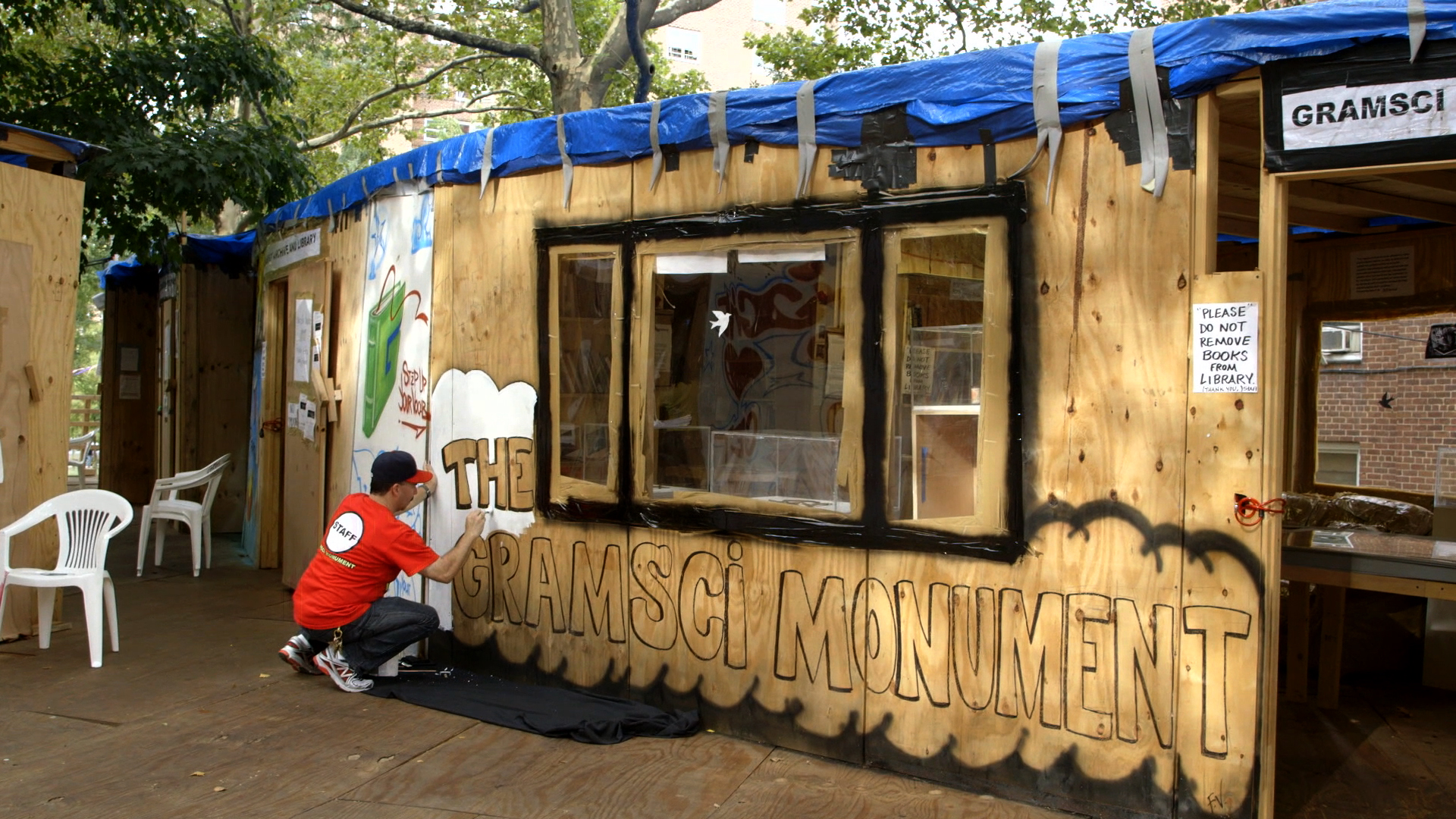
"Gramsci Monument" by Thomas Hirschhorn (2013), Bronx, New York
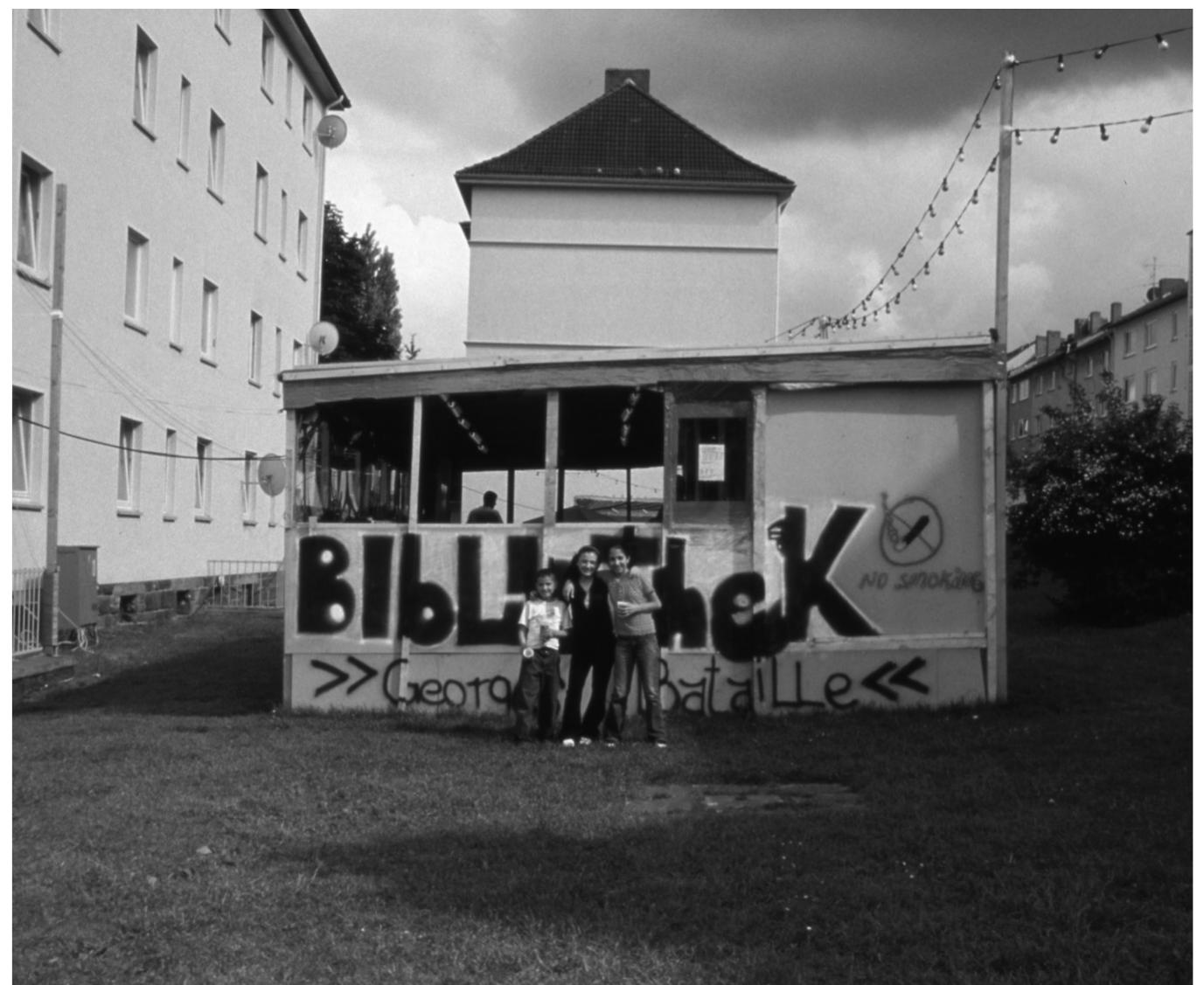
"Bataille Monument" by Thomas Hirschhorn (2002), documenta
V.
as a detour, ive been meaning to write something about the exhibitionary value of the kampuhan. the last one, as of writing this, was in front of the department of agrarian reform. the kampuhan is set up by farmers from around the philippines and peasant advocates (among others) to occupy the outside premises of dar and insist on their right for their land.
what this petty b teacher is interested in is the form which it takes. the structure for the kampuhan needs to provide shelter for the farmers and activists who will be sleeping through the night while also being a site for educational discussions in the morning and afternoon with the inclusion of cultural performances in the evening. with these requirements, the last kampuhan was a series of triangular shelters, all connected, made up of tarpaulin roofs and a long piece of wood from which the tarps would drape. you can walk from one end of the kampuhan to the other with various zones dedicated to educational discussions, mural painting, medic zone, rehearsal space for cultural performances, and general sleeping quarters.

photo taken: mar 25, 2025. the side of the kampuhan facing the qc circle.

photo taken: mar 25, 2025. chords and lyrics for tano at the rehearsal zone of the kampuhan

photo taken: mar 25, 2025. banners on a former jeepney stop next to the kampuhan
outside the triangular structure, placards and calls for genuine land reform serve as a wall against the harsh afternoon heat as well as for passers by to understand or at least note what is happening. the other wall, of course, is the gate of dar.
why I am noting the kampuhan is it reminds me of the monuments of Hirschhorn dedicated to theorists. these monuments were noted in Battista's text. rather than noting theorists, however, the kampuhan is the product of various peasant struggles in the philippines unified by their call for genuine agrarian reform. rather than a simulation of cardboard shacks of Hirschhorn's monuments, the kampuhan addresses urgent needs of the farmers who travelled far and risked their lives to demand their land at the doorstep of dar. while Claire Bishop might note the antagonism between hirschhorn's monuments and the biennials he participates in, the kampuhan calls for solidarity across farmers, workers, students, general passers by, and highlights the antagonism of the state against the farmers of the philippines.
what I want to point out by pointing out the kampuhan is how it teases out practice and theory. the countless hours spent by organizers and farmers in organizing the kampuhan and the safety of its participants is where new theory is made. rather than signifying a theory, as noted by Battista from artistic practices, theory finds form in material needs through practice. it is not a "theoretical practice" as its theory will be tested by police presence, intelligence units, and state harassment. as Mao noted elsewhere, correct ideas come from social practice.
VI.
perhaps what is also underlined here is so-called failure of the "avant garde" in uniting art and life, and inevitably politics. interestingly, the first use of "avant garde," a French military term, in reference to artists is attributed to saint-simon. the mission of the modernists to question the boundaries of art is a question we keep asking in my classes. how do we make better, newer art? or perhaps, better put, as Mao asked elsewhere, for whom?
what I am trying to get at, I think, is a reframing of "failure" as a momentary defeat in a well-worn battle. I was recently forwarded this text by Cem A alias freeze magazine called "consensus aesthetics: the political economy of agreement in contemporary art." maybe what bourgeois art mines in dusty theory is what revolutionary art (or broadly aesthetics) seeks to write in practice, if that makes sense.

No comments:
Post a Comment